Background
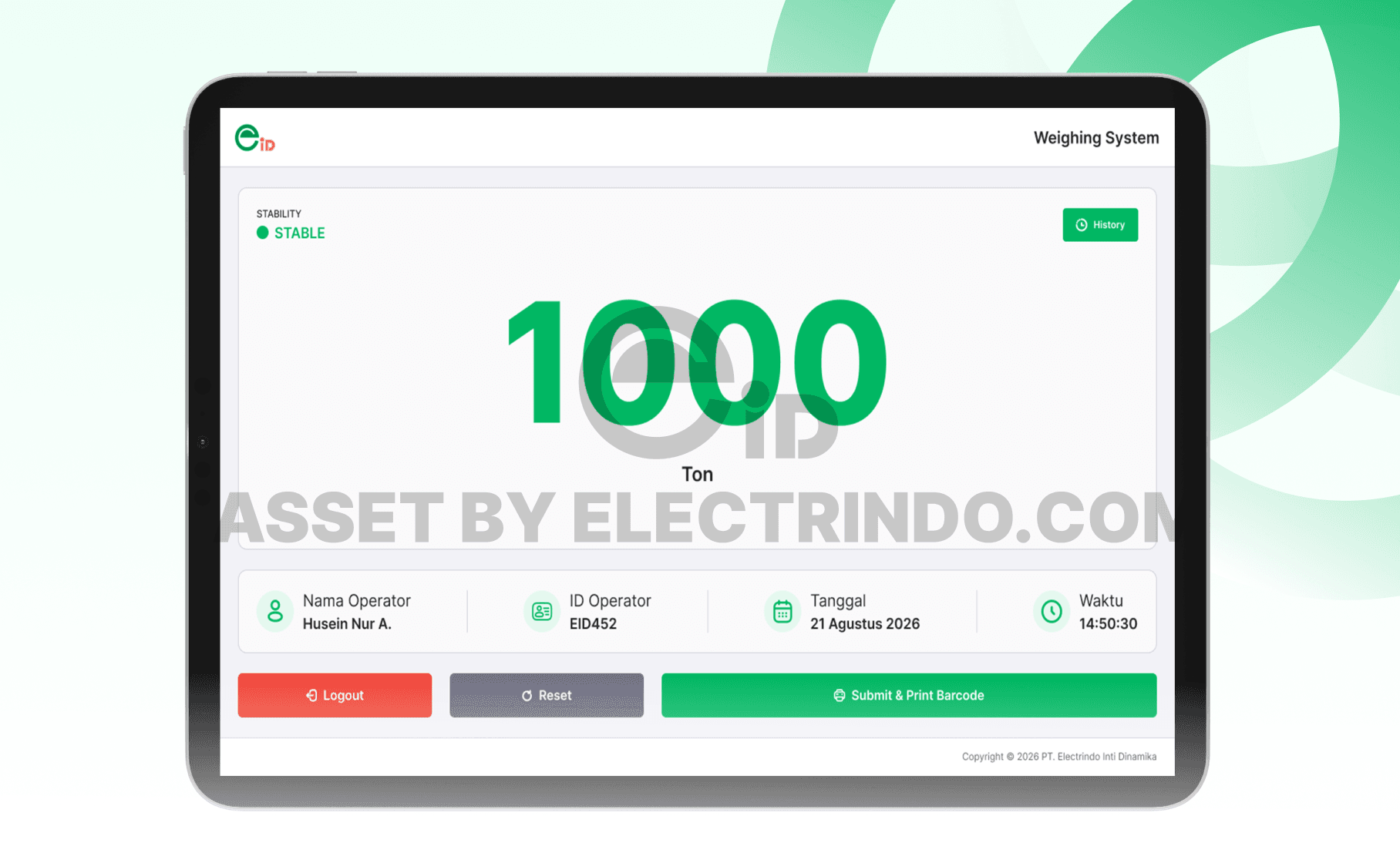
The Weighing System is a digital platform designed to monitor and manage the product weighing process in real time. The system is developed to integrate weighing activities, operator information, transaction records, and barcode printing into a centralized system, enabling the weighing process to become more accurate, structured, and traceable.
Previously, the weighing process was performed manually and was not supported by an integrated system. This condition made it difficult to obtain accurate and real-time weighing results, while weighing records were also more difficult to manage and track. The absence of an integrated process could also result in an unstructured workflow between the weighing process, data recording, and barcode printing.
The system utilizes a PLC to capture real-time weight data from the weighing equipment and processes the information through the system before storing it in the database. The system also runs on an industrial tablet, allowing operators to perform the weighing process directly from the operational area.
The system records important transaction information, including product weight, operator name, operator ID, date, and weighing time. After the weighing process is completed, the operator can submit the transaction, store the data into the database, and automatically trigger barcode printing for further identification and traceability.
Challenge:
Manufacturing and logistics processes require accurate and traceable weighing data to ensure that every weighing transaction is properly recorded. The key challenges addressed by this system include:
1. Manual and Non-Integrated Weighing Process
The existing weighing process is still performed manually and does not have an integrated system connecting the weighing equipment, operator information, transaction records, and database. This condition makes the process less efficient and increases the possibility of recording errors.
2. Inaccurate and Non-Real-Time Weight Data
Weighing results are not previously available in real time through an integrated digital system. This makes it difficult to ensure that the recorded weight accurately represents the actual weighing result at the time of the transaction.
3. Unstructured Weighing Workflow
The process from operator identification, weighing, data recording, validation, transaction submission, and barcode printing is not yet managed in a structured workflow. This can make the weighing process less efficient and more difficult to monitor.
4. Limited Weighing Data Traceability
Without a centralized transaction history, previously recorded weighing data is difficult to track and review. Operators need a structured history feature to view previous weighing transactions and ensure that weighing activities are properly documented.
5. Manual Barcode Printing Process
The weighing transaction needs to be connected with barcode printing so that each completed weighing activity can generate an identification barcode. Without system integration, this process may require additional manual steps and increase the possibility of operational errors.
Project Goals:
- Provide real-time weighing monitoring to ensure accurate and reliable product weight information.
- Integrate operator information with each weighing transaction to improve data traceability.
- Provide a centralized weighing history feature to record and review previous weighing transactions.
- Create a more structured and efficient weighing workflow from operator identification to transaction submission.
- Store weighing transaction data automatically in the database after the operator submits the transaction.
- Provide an automated barcode printing trigger after a weighing transaction has been successfully submitted.
Features Offred:
1. Real-Time Weighing Monitoring
- Display product weight captured directly from the weighing equipment.
- Monitor weighing results in real time.
- Display the current weighing status through the weighing interface.
- Provide a clear and centralized weighing interface for operators.
2. Operator Identification
- Display the name of the operator performing the weighing process.
- Display the operator ID associated with the transaction.
- Connect operator information with the weighing transaction for better traceability.
- Provide an operator login mechanism before accessing the weighing system.
3. Data Validation
- Display weighing information before the transaction is submitted.
- Allow the operator to verify the weight, operator information, date, and time.
- Provide a confirmation step before storing the transaction.
- Reduce the possibility of incorrect transaction submission.
4. Weighing History
- Record all completed weighing transactions.
- Display historical product weight data.
- Display the date and time of each weighing transaction.
- Provide a structured history table for operators to review previous transactions.
- Provide pagination to support a larger number of historical records.
5. Submit Weighing Data
- Submit completed weighing transactions through the system.
- Store submitted transaction data into the database.
- Ensure each transaction contains the required weighing and operator information.
- Provide a clear submission process after data validation.
6. Automatic Barcode Printing
- Trigger barcode printing after a weighing transaction is submitted.
- Generate a barcode as an identification label for the weighing transaction.
- Connect the weighing transaction with the printed barcode.
- Reduce manual steps in the barcode printing process.
Result:
The implementation of the Weighing System is expected to deliver several significant improvements, including:
- The weighing process becomes more structured because operator identification, weighing, validation, submission, and barcode printing are managed through a single system.
- Weight data can be captured and displayed in real time, reducing reliance on manual recording.
- Weighing transaction accuracy and traceability are improved because each transaction is associated with operator information, date, time, and product weight.
- Weighing history is available through a centralized system, allowing operators to review previously completed transactions.
- Data recording becomes more efficient because submitted weighing data is automatically stored in the database.
- Barcode printing becomes faster and more integrated because the system can automatically trigger the printing process after transaction submission.
- Manual processes are reduced, helping operators perform weighing activities more efficiently.
- The system provides a clearer and more measurable workflow for managing weighing transactions.